
The Alfred Monument, Swanage
KINGS OF WESSEXKING ALFRED THE GREATJOHN MOWLEMSWANAGEALFRED MONUMENT, SWANAGE
3/2/20264 min read
Source: Own photo
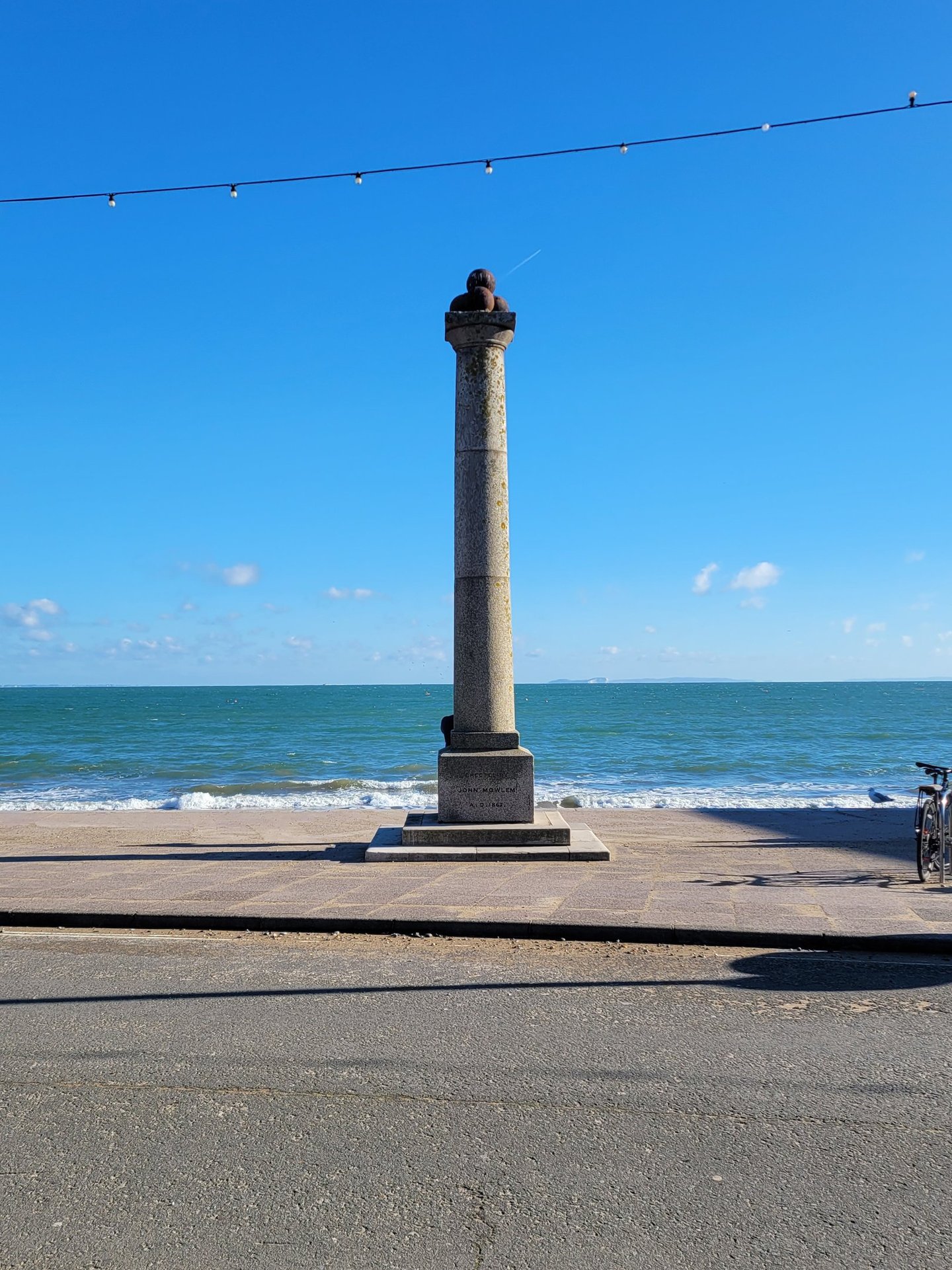
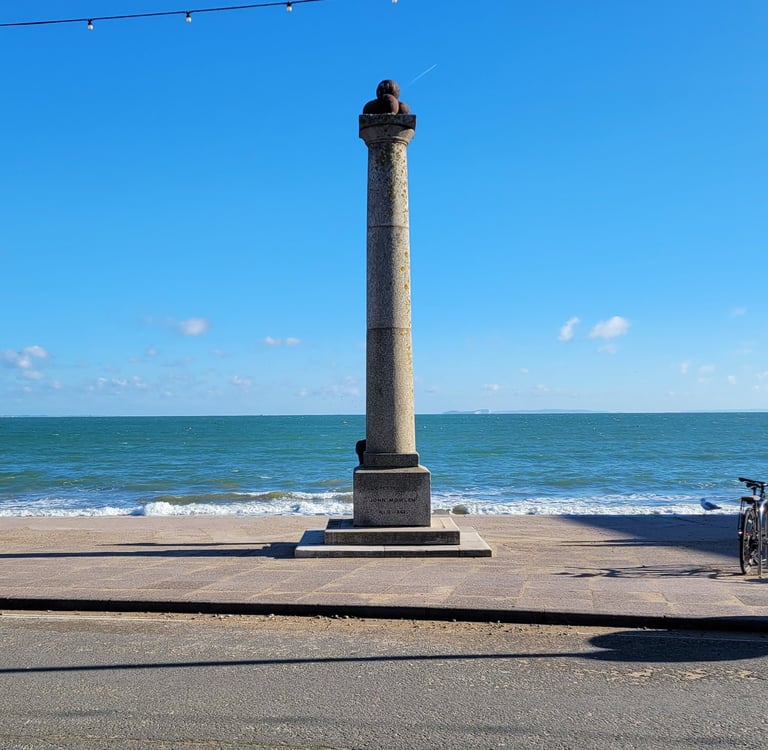
The unassuming King Alfred Monument, located on the Swanage seafront near the Mowlem theatre, is probably ignored by most passers-by, eager for the beach or the amusement arcades opposite. However, it is one of the town’s most curious landmarks - part historical tribute, part Victorian upcycling project - and tells two very different stories: one from the 9th century and one from the 19th.
The ninth century event, as the base of the monument proclaims, is 'in commemoration of a great naval battle fought with the Danes in Swanage bay by Alfred the Great, A.D. 877'. Alfred (reigned 871-899) spent most of his reign trying to defend his kingdom and the English peoples from the encroachment of the Danes. The fortunes of both sides swung back and forth; the Danes were quick to make truces and quick to break them according to their fortunes. The battle commemorated here comes at a point when the Danes have broken a truce of 876 and plan to attack Alfred's forces by land and sea. Deferring to my copy of The Anglo Saxon Chronicles (honestly, you'd be surprised how often this book comes in handy), according to the venerable monk historians, events actually went thus:
877 The [Danish] force came to Exeter from Wareham, and the ship-force sailed around, west; then they met a great storm at sea,and one hundred and twenty ships were lost at Swanage. King Alfred rode after the mounted force with troops to Exeter, but they could not overtake them before they were in the fort where no one could get to them. There they gave him hostages, as many as he wished, swore great oaths and held a good peace. (p. 96)
As the adage goes, fortune favours the brave. This time, Alfred was spared a fight on two fronts, and even if he did not actually have to battle at sea, the event helped cement his reputation in history as father of the Royal Navy. But why has a non-existent battle become a legend? For a start, legends abound around Alfred, most notably, of course, the story of his burning the cakes. He is the English King who never gave up, even in the face of overwhelming defeat. And he did indeed build up the English navy and fight on land and sea to preserve the freedom and nation of the English peoples. I think Alfred is less lauded today than he should be - he was certainly seen as a key English king right through the Victorian and Edwardian ages, and is the only one to be given the title 'the Great'. During the time of relative peace in his reign, he promoted literacy, including translating the classic great texts for the education of his people, encoded justice for all regardless of rank, and built up the monasteries as centres of learning.
Which is to say, to return to the main subject of the blog, it is not so unlikely that, as a local Wessex man made good, John Mowlem would choose to commemorate a pivotal moment in English history that ties Swanage to a great English king.
John Mowlem (1788-1868) made his fortune in stone work in London, most lucratively gaining contracts to pave the capital city. When he retired in 1845, he moved back to Swanage and spent the rest of his life in local philanthropy and transforming Swanage from a fishing and quarrying village to a popular seaside resort. He and his nephew, George Burt, are responsible for many of Swanage's monuments and odd landmarks, many the result of ballast brought back in their ships after carting stone to London (that will probably get a blog post of its own one day).
The Alfred monument is a granite Tuscan column set on stone steps. One the one side, it has the inscription given above; on the other is carved 'Erected by John Mowlem A.D. 1862'. So far, so good. Then, in a fit of thrifty enthusiasm, Mowlem had a set of four cannon balls salvaged from the Crimean war (1853-56) set on top (I believe from sources that they are Russian, too - not even English!). No matter that cannons were not around in England for another 550 years or so - it at least evokes the sense of a great battle. But if you think Mowlem was fanciful, take a peek at the painting commissioned in 1927 for the Houses of Parliament that portrays the same event:
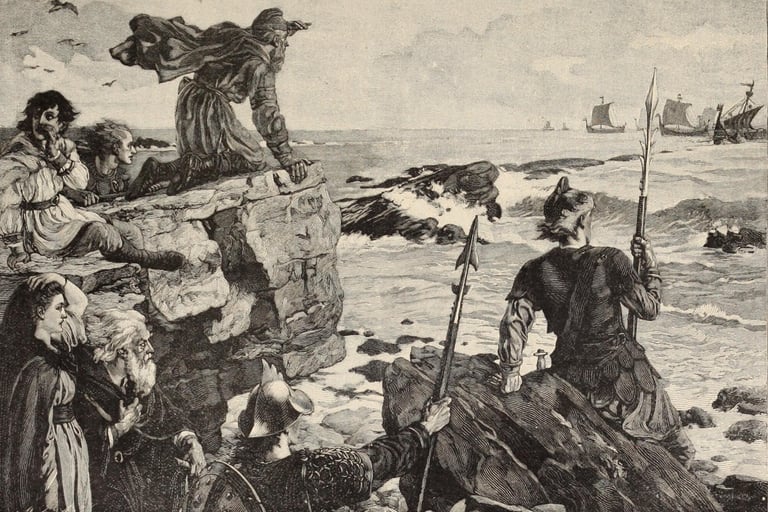
How the Danes came up the Channel a Thousand years Ago - Herbert Alfred Bone. Source: Wikimedia commons
The column was at first set by the Mowlem Institute, nearer the sea. However, erosion by waves and, ironically, a series of storms, undermined the column and it collapsed in 1883 (this was before the sea wall was built). However, it was swiftly rebuilt. In 1965, it was moved along slightly to its present location on Shore Road to make way for development. In 1983, it was given the status of a Grade II listed monument, a vindication of Mowlem's vision perhaps, but certainly recognition of its place among Victorian public architecture, and of Alfred's place in our nation's history.
So if you are ever wandering along the Swanage sea front keeping your ice cream safe from the seagulls, take a moment to pause and look at the monument, and Swanage bay, and think about how the tide of history was changed (pun intended) over a thousand years ago in this cheerful seaside town.
Selected sources:
The Anglo-Saxon Chronicles, translated and collated by Anne Savage (Note - this is not a typo. Most people write of 'The Anglo-Saxon Chronicle', but there were several and this is a collation of the manuscripts.)
Historic England: https://historicengland.org.uk/listing/the-list/list-entry/1153297
Swanage Museum and Heritage Centre - https://swanagemuseum.org.uk/swanage-heritage/
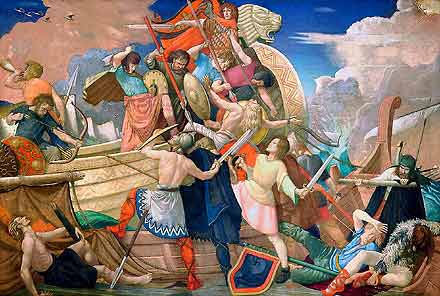
King Alfred's longships defeat the Danes, by Colin Gill. Source: explore-parliament.net
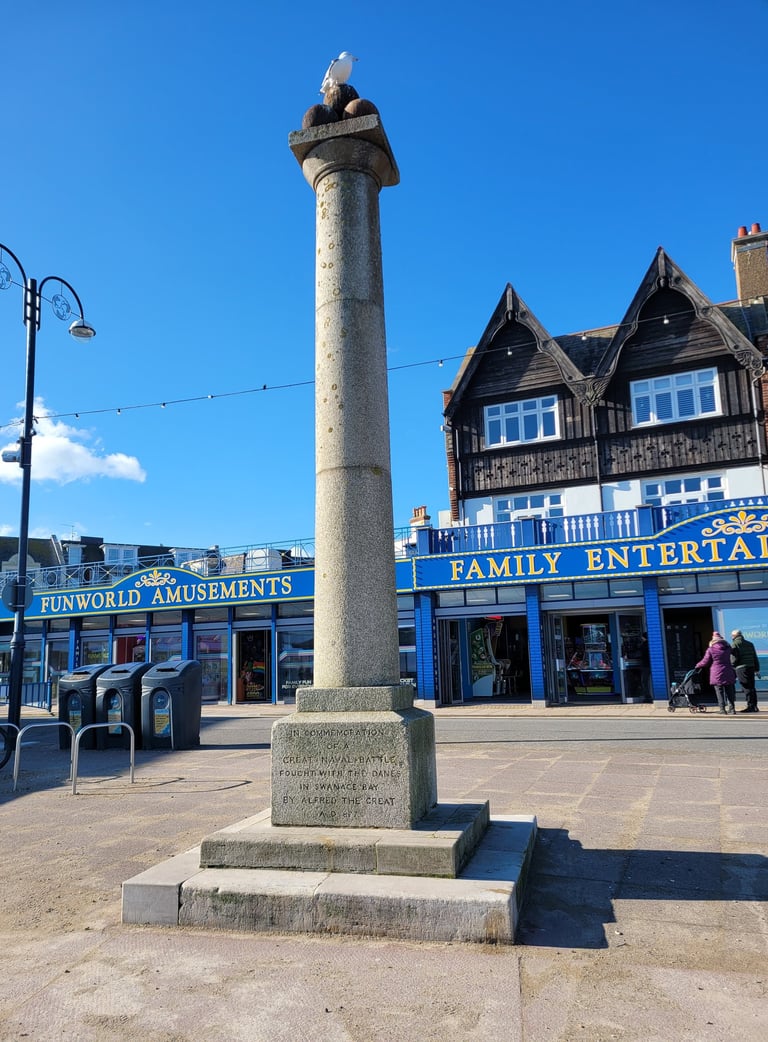
Source: Own photo