
Book review: Moonfleet by J. Meade Falkner
DORSET COASTLINEBOOK REVIEWSJURASSIC COASTDORSET, ENGLANDMOONFLEETJ. MEADE FALKNER
2/23/20263 min read
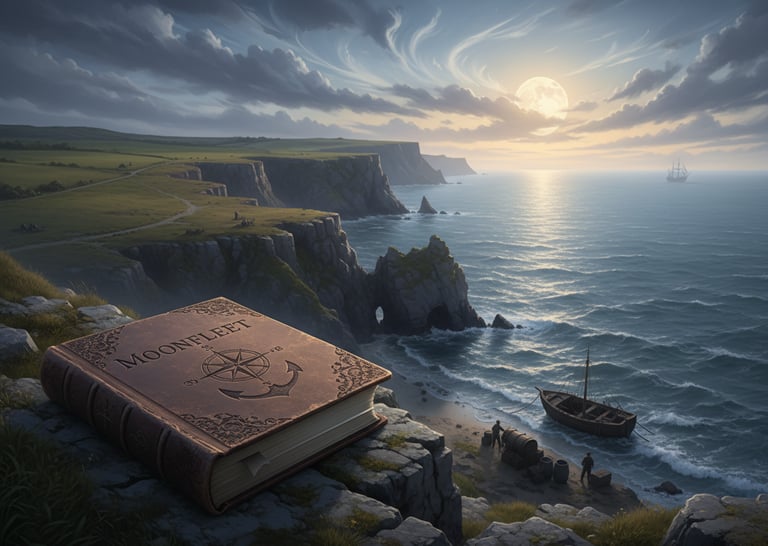
Image generated with Adobe Firefly
Smugglers, hidden treasure, ghosts, a centuries-old curse, and forbidden love – a compelling story set against the background of the Dorset coast.
Since I write about Dorset, I’ve long had Moonfleet on my to-be-read list. The author, John Meade Falkner, was raised in the Dorset and Wiltshire areas, though he ended living up north. Among his many writings, he published three novels, of which only Moonfleet is still well known.
Naturally, Moonfleet is prominent in Dorset shops, and whenever I visited The Swanage Bookshop, there it was, looking me in the face, reminding me of my resolution. Finally, with no other research plan in mind for my recent trip during a wet and windy February, I picked it up. Below is my review with (I hope) a minimum of spoilers.
Moonfleet was written in 1898, but is set in the mid-eighteenth century. The narrator is John Trenchard, who, when we meet him, is a fifteen-year-old orphan being raised by his cold Aunt Jane in the village of Moonfleet, part of the estate of the Mohune family. However, John is not the sober, pious boy that his aunt would prefer, but a dreamer in love with the magistrate’s daughter, Grace Maskew (far above him socially), with the wild ocean, and with the legends that surround him – particularly that of Colonel ‘Blackbeard’ Mohune, who, it is rumoured, haunts the village searching for his hidden treasure, ill-gotten through betrayal of King Charles I, and said to be cursed.
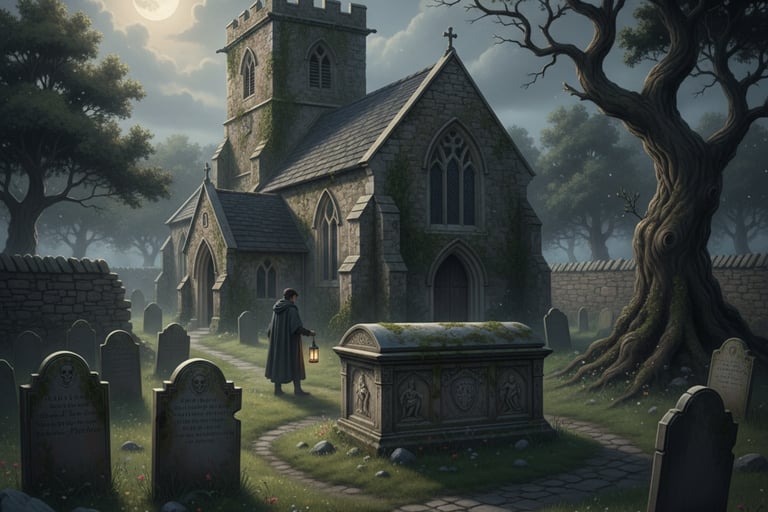
Image generated with Google Gemini
When John’s obsessions land him in hot water with his aunt, he is taken in by Elzevir Block, landlord of the Why Not? inn, whose own son has been recently and brutally killed by customs enforcers, and is drawn into the local smuggling ring. But Grace Maskew’s father has a cruel hatred of the smugglers and the sympathy they engender among the villagers. A chain of events unfolds that will lead John far from all he loves and seems to show that, indeed, Blackbeard’s curse is all too real…
My first thought was that Moonfleet would be a good read-aloud to share with my ten year-old, who, despite tackling novels several hundred pages long, still likes to be read to. So I settled down to read a little myself, because I wasn’t familiar with the story and wanted to get a sense of the style and genre (yes, I put a lot into my narrating). Anyhow, a few pages in, I began to have doubts that it’s a novel for the younger middle grades: it’s surprisingly gritty for a so-called children’s classic. I’d honestly call it YA rather than children’s literature, and suggest using your judgement if your child is in the preteen years. Fantasy literature and computer violence is one thing; ‘real-life’ brutality and graveyard terrors are another altogether. It also (if your child is old enough to pick up on this), raises some tough ethical questions, with few of the characters being black and white moral cut-outs.
There seemed a certain serendipity in delaying reading Moonfleet until I was in Dorset for a particularly wild and rainy winter. Standing on the cliffs at Peveril Point, buffeted by the wind and rain and watching the waves crash against the cliffs, the drama of many scenes in the novel were particularly vivid to me, though the action is set further along the coast, around Chesil beach and Portland Bill.
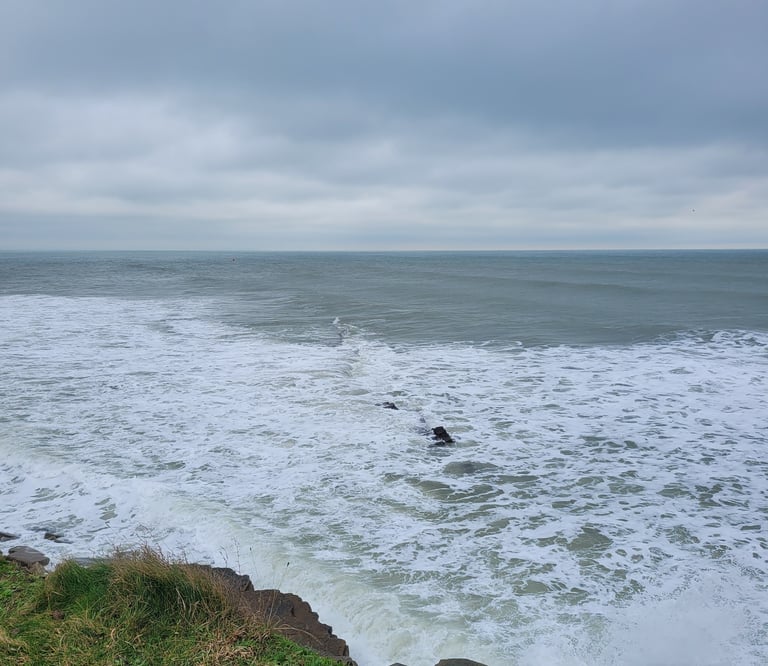
Source: own photo
The language may be a little stilted for children today, unless you have already been raising them on a diet of classics (my degree is in English literature, so my children had no choice in this), and you’ll have to gloss some of the terms (for example, ketch and contrabandier) but the adventure is gripping, and though all’s (almost) well that ends well, there are stark lessons in the story, as well as questions that I pondered for some while after closing the book. So, I’d say it’s ‘all ages’ in the sense of a Dickens novel, and a definite winner for a family read-aloud on your next seaside holiday.
Pointers for parents: I would describe the violence in the book as not graphic, but matter-of-fact, and there are scenes involving graveyards and corpses. Also, if you like to be prepared for conversations on stereotypes, there is a Jewish merchant who is portrayed as a Shylock-type figure.